Introduction
Hitting the “publish” button isn’t the first step—nor the last—in bringing your book to life. There’s a winding path full of choices, iterations, and, let’s be honest, a bit of nail-biting.
Whether you’re an author in the making or a seasoned scribe, I invite you into my world with this blog post, to walk you through the steps I personally take to bring my stories into the world. Shall we begin?
When is the Text Really ‘Done’?
I stumbled upon a rather unsettling line on YouTube vlog once: “Your first book is going to suck, but write it anyway.” A harsh truth, perhaps, but it does shed light on a predicament many writers face: the never-ending cycle of revisions. In my experience, I find that there’s a point where ‘perfect’ becomes the enemy of ‘good.’ For me, it’s not about endlessly polishing every sentence but reaching a stage where I can confidently say it’s “good enough.”
So, how do I determine when my text is finished? I listen closely to the story as it unfolds. Each word and sentence comes together to form a vivid picture that aligns perfectly with my initial vision. It’s as if the story in my mind springs to life on the page. When everything falls into place, and the narrative seems to breathe and find its own rhythm—that’s my cue. You could say my stories have a way of telling me when they’re ready. And when they give me that signal, who am I to argue?
It’s All About the Imagery
Once the text is finalized—or “good enough”—it’s time to shift focus to the visual element. Now, I love when text and images start to blend into a coherent story. However, even in the realm of children’s books, those images seldom stay put. The characters, be it Alexia or Phoebe, often choose their own adventures, making my initial sketches almost look like rough drafts.
So, what’s the takeaway from all this? Never get too attached to your first drafts, be they textual or visual. It’s like the story and its characters are living beings—they grow, they evolve, and they surprise you. Your job as the creator is not just to capture a moment in time but to allow space for these unexpected developments. Being open to changes not only enriches the story but also adds layers of depth to the illustrations. Your story is a living entity; let it breathe, let it change, and let it surprise you.
Synergy—Getting Text and Images to Play Nice
In an ideal scenario, every image would nestle effortlessly alongside your text. But let’s be real—sometimes an arresting image comes with the wrong aspect ratio, or the text decides it wants to stretch out lazily, longer than a Sunday afternoon nap. What to do? Well, if an image is compelling enough, I find myself willingly going back to tweak the text.
For instance, in my upcoming book, Alexia initially wore a beanie in all the illustrations. But there was one particular image—oh, it’s one of my favorites—where she wasn’t wearing the beanie. The image was too good to alter, so guess what? I adapted the story itself. Alexia now drops her beanie at some point, allowing that beautiful illustration to fit seamlessly into the narrative.
Of course, making even small tweaks at this late stage can be a bit like pulling a thread in a beautifully knitted sweater—you must be cautious, or you could unravel more than you intended. That’s where the final proofread comes into play. It’s not just a sprint through spellcheck or a cursory glance for a missing comma. It’s your last opportunity to ensure that any changes you’ve made—like my decision to have Alexia drop her beanie—are reflected consistently throughout the book. This final pass is crucial for catching anything that might have been thrown off balance, be it duplicate text or a picture that no longer jibes with your revised narrative. Think of your story as a complex puzzle; each piece must fit perfectly for the entire image to come together as envisioned.
Judging a Book by Its Cover—Where the Devil Meets the Details
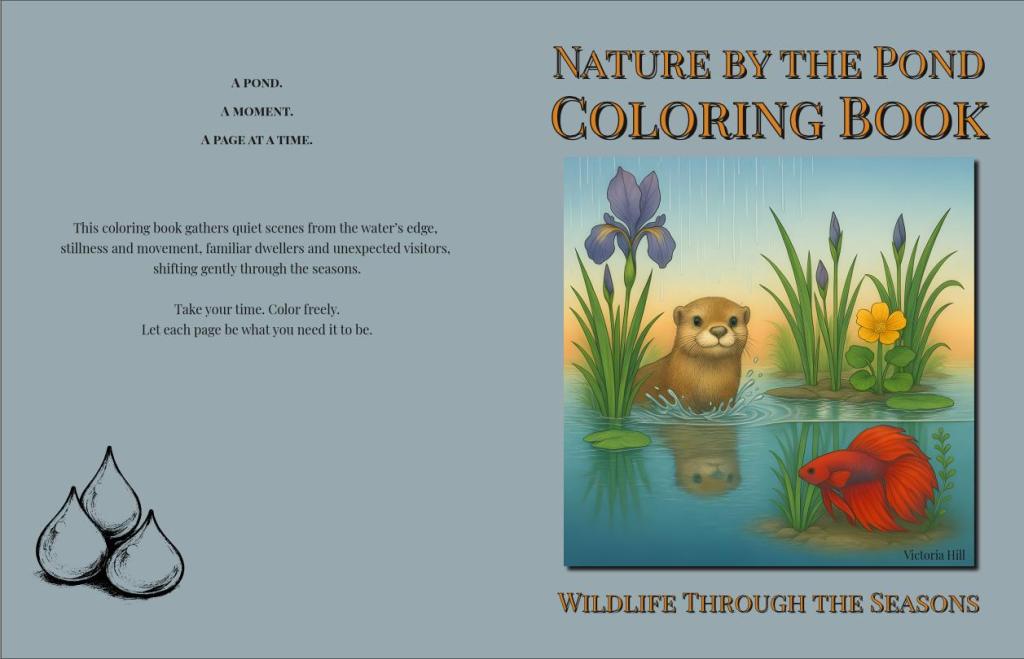
Ah, the cover. It’s what first catches the eye, and you want it to be just right. And if you think this is all straightforward, think again. I’ll share with you a story through three images. The first two are cautionary tales, showcasing an all-too-common snag: what appears to be pitch-perfect in your design software can morph into a convoluted disaster once converted to a PDF. A quick tutorial search later, the third image will be a testament to the redeeming power of YouTube.
This isn’t just about the cover, though; it’s a lesson that applies to all images in the book, especially those with multiple layers. Sometimes, these layers have a mind of their own, creating unexpected glitches that could send any author into a frenzy. Trust me, layers can be as stubborn as my characters sometimes! So what’s the takeaway? The devil truly is in the details. They’re the delicate threads that weave through the entire tapestry of your book, keeping it cohesive and compelling. Neglect them, and you risk unraveling your carefully crafted narrative before your readers even get past the first impression.

all systems go.

Alexia’s eyes post-export.

From Reviews to Release—The Final Frontier
Navigating the final steps of book publishing is a bit like steering a ship through uncharted waters—exciting but daunting. For me, the first signpost is the review process. This isn’t a mere ego boost or a box to tick off; it’s an invaluable phase where I get feedback that can either validate my efforts or send me back to the drawing board. Peer reviews, in particular, are gold. It’s like having a friendly pair of eyes double-check that you haven’t left the oven on—helping you spot issues you might have overlooked.
Then comes the crucial task of self-publishing and marketing, areas admittedly not my forte. But hey, we all have to start somewhere, right? Uploading a book to a self-publishing platform can seem as intricate as assembling a ship in a bottle. And let’s not even talk about marketing plans; they’re a universe of their own. But guess what? With each book, I’m learning. I’m learning which platforms work best for me, what promotional strategies resonate with my audience, and how to plan a release that doesn’t involve me tearing my hair out. So, if there’s one piece of wisdom I’d like to pass on, it’s this: it’s a journey. Embrace the learning curve, and don’t forget to enjoy the ride.
So there we are, at the end of this winding path that leads to publishing a children’s book. I hope my personal journey has served as a sort of guide through the maze of final steps—much like the one in our first image. If you’ve found this helpful or even just entertaining, I invite you to delve deeper into my own world of children’s stories.
Happy writing, everyone!

 Artistic Adventures with Victoria
Leave a comment