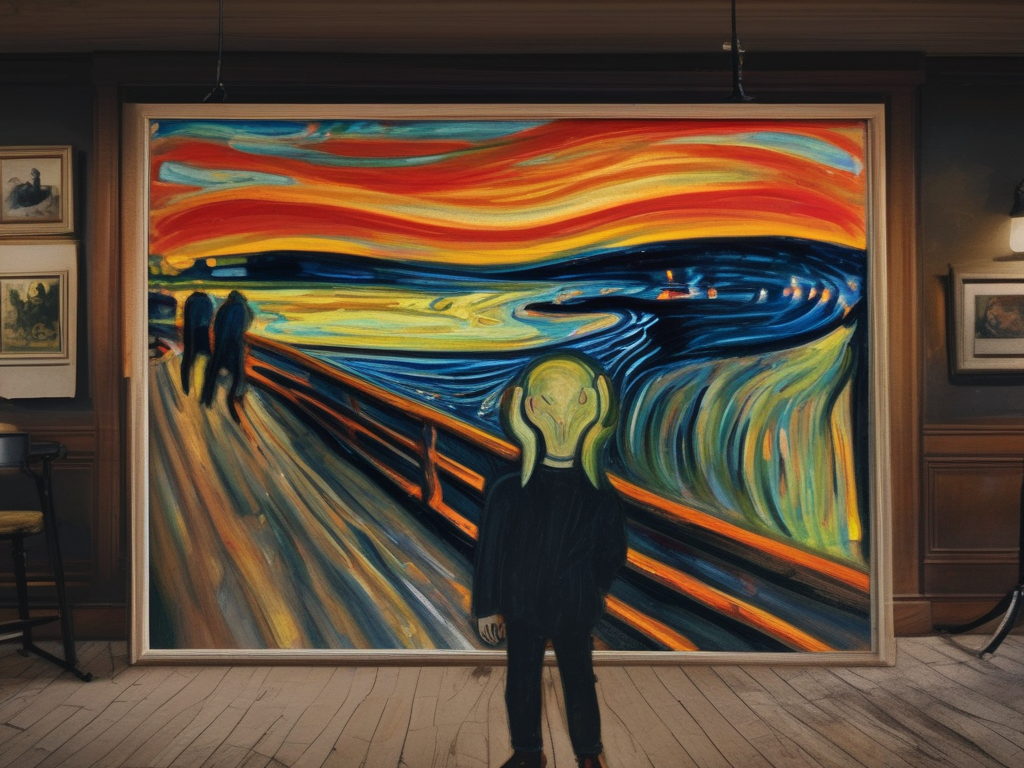
In an age where artificial intelligence is becoming an integral part of our daily lives, it’s fascinating and somewhat alarming to see how the creators of these AI models impose certain restrictions on what can be generated or discussed. One might argue that these limitations are a subtle infringement on our freedom of expression, echoing the very concerns that many have voiced about censorship and creative liberty. Or, if not quite this serious, at least you can have a disagreement with an AI model these days.
The Case of “The Scream”
I was writing my latest blog post and wanted to add a featured image to it. I wanted to create a replica (finger-paint version) of Edvard Munch’s iconic painting “The Scream.” I had a good reason to choose this particular painting. It features a figure with an expression – the figure is screaming – which is a very popular idea for a thumbnail in the world of YouTube.
This masterpiece, created in 1893, is in the public domain, meaning anyone can use, recreate, or derive works from it without legal restrictions. However, when I attempted to generate a finger-painting version of “The Scream” using a well-known AI model, I was met with an unexpected roadblock. The AI, adhering to its content policy, refused to create the image for me.
The Boundaries of AI Creation
As I did not get my image, I asked about this limitation, and the model replied.
My instructions prevent me from creating replicas of artworks created after 1912.
This is an interesting reply as this painting is from 1893. To my understanding, this is before 1912 and thus the limit should not apply. The model agreed but did not create my image, instead, it replied with the same limitation.
I realize that there are good reasons behind these limitations – we live in the era of deepfakes, spreading misinformation, or generating explicit content. These are valid concerns, given the potential for harm. On the other hand, these limitations inadvertently stifle creativity, expression, and, may I dare to add, freedom of speech.
A Double-Edged Sword
The creators of AI models walk a fine line. On one side is the necessity to ensure ethical use and prevent the propagation of harmful or misleading content. On the other side is the risk of over-policing and inadvertently suppressing legitimate, creative endeavors. This balancing act often results in broad policies that, while well-intentioned, can feel restrictive to those who wish to push the boundaries of artistic expression.
For instance, an artist wishing to explore new interpretations of classical works might find themselves unable to do so using AI tools. Writers seeking to visualize scenes from public domain literature in innovative ways might hit similar roadblocks.
Moving Forward
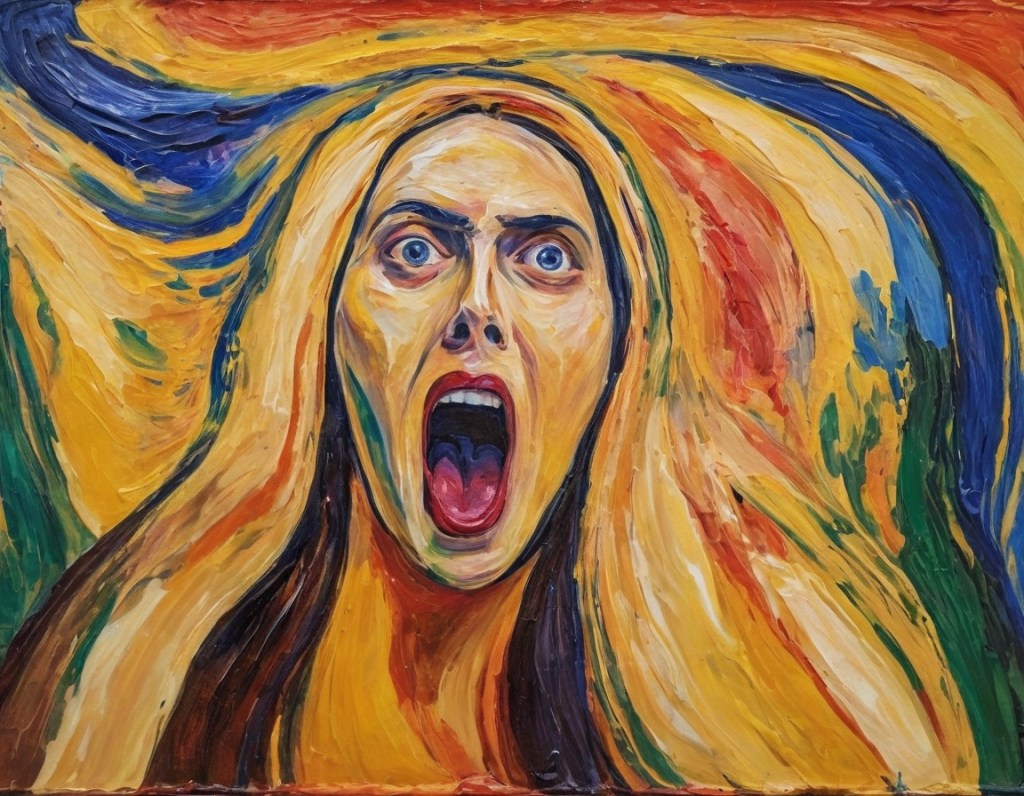
As AI continues to evolve, it is crucial for creators, policymakers, and the public to engage in discussions about the balance between ethical considerations and creative freedom. I would also like to add that these limitations are not insurmountable roadblocks. I was so annoyed that I opened a different model, one without any limitations, and created my image. Here it is again; please be aware, this is not the real painting!
 Artistic Adventures with Victoria
Leave a comment