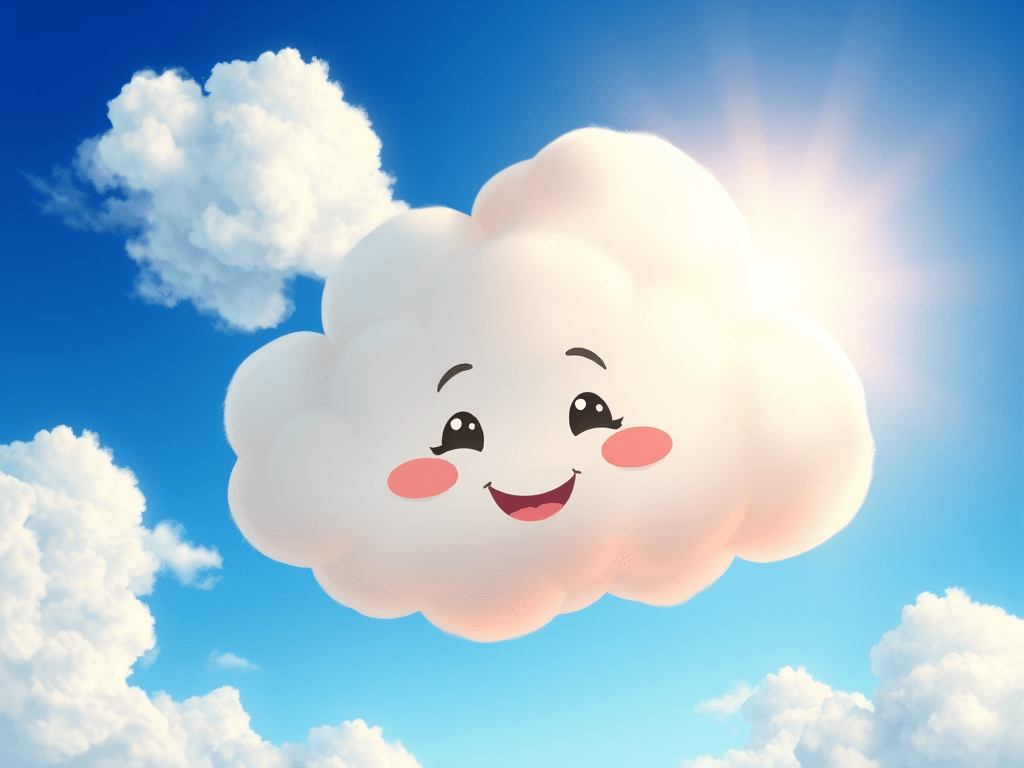
Lately, I’ve been pondering a question that has nagged at me ever since generative AI tools started popping up everywhere: Could someone take my blog notes and piece together a complete children’s story—my story—in just about an hour? With AI text generators and art tools now readily available, how much time does it really take to produce something readable—or even publishable?
I decided to run a little experiment to find out. Could AI create a story from scratch? I chose not to use any of my own notes; instead, I let the AI build the story from nothing. I allowed the AI to decide all the specifics. However, that approach quickly revealed a challenge: AI is a good assistant, but it isn’t so adept at choosing between options. Perhaps there is a way to make it choose, but I wasn’t able to do so. Of course, if you have your own notes—or even borrowed ones—this isn’t an issue; you simply feed them to the model. I opted for a different route: the AI presented options, and I selected from those choices. This was the beginning of the story about a friendly cloud named Cumu (derived from “cumulus”), who just wants to be helpful but can’t quite master the art of raining the right amount at the right moment.
Speed Over Perfection
I have to say, the AI was very helpful—questioning and suggesting what to do next. As I made choices, the story progressed. I restricted the narrative to the options provided by the AI. You don’t have to be confined by these options, but since I was playing a speed game, this was the fastest route. Easy, right? Well, not exactly. I soon discovered that while AI can generate a decent storyline, the text often contains logical hiccups or awkward segments where the narrative makes little sense. At first, I chose to ignore these issues, but eventually, I corrected them—I couldn’t leave in parts that simply didn’t work.
The Visual Chaos
Next came the images. I envisioned around 20 adorable illustrations for the children’s book—scenes with Cumu hovering over a peaceful village, accidentally soaking a little bird’s nest, or watering a gardener’s plants a bit too enthusiastically. AI image-generation tools can produce some eye-catching artwork, but they often go off-script. One minute, you get a perfect, fluffy cloud with a sweet smile; the next, you get something so bizarre that you have to double-check you typed everything correctly. Sometimes, correcting the images is possible, but not always. Do you see anything off with this example?
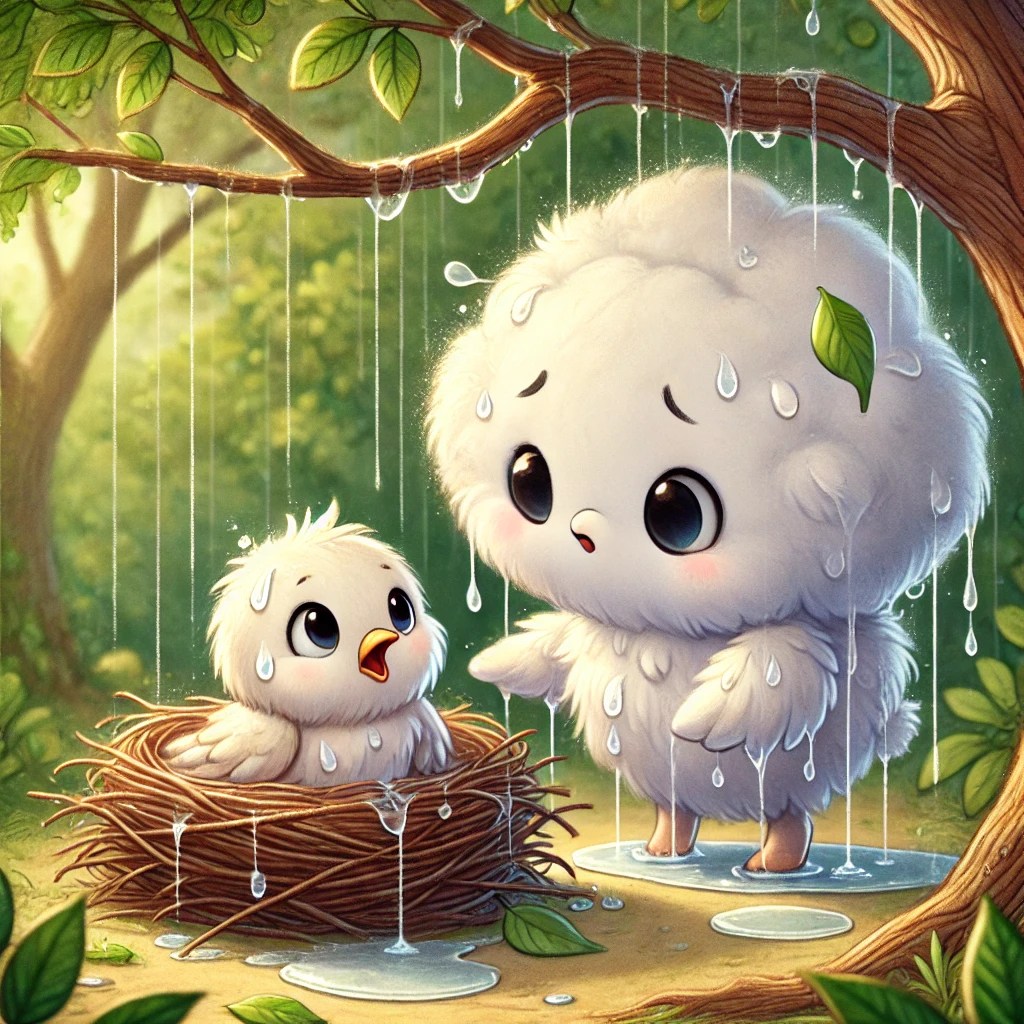
Somewhere along the way, it was time to plan the title—or rather, ask for options for the title. After a few long chats, I landed on Cumu the Little Cloud – A Gentle Tale of Raindrops and Light. Much more my style! I had all the pieces for the book, but the one-hour mark was long past by that stage.
So… Mission Accomplished?
In the end, I did come away with a draft—complete with text and illustrations. But then came the small task of editing. I decided to take the easy route with an ebook only—in this case, keeping the images at their original size. No additional editing was needed; they simply couldn’t handle print at this stage, as you might have guessed. I couldn’t leave the text as it was, so I made some additional alterations. This chipped away at the fantasy of a purely AI-driven book appearing instantly on my screen. Why make these changes, you might ask? The answer is simple: I like the story and plan to publish it!
The Next Step: Publishing
Now, I plan to upload Cumu the Little Cloud – A Gentle Tale of Raindrops and Light to Amazon and see if it meets their publishing guidelines. Of course, I’ll have to declare that AI played a role in its creation—transparency is key.
Final Thoughts
So, did AI cut my work time down to zero? Not a chance. Could someone else, with a different project or approach, manage to do it all with AI—and possibly in an hour? Maybe—but the results might be riddled with unpolished text and images that are completely off. Still, it’s impressive how quickly AI can generate creative fodder, leaving you to handle the finer editing and personal touches. If nothing else, this experiment confirms that while AI can be an invaluable assistant, it’s not (yet) a perfect substitute for human insight. And that brings us back to my original question: Could someone take my blog notes and craft a fully formed children’s story using AI in just about an hour? Maybe—but whether you’ll be proud to call it your own is another story.
What do you think? Would you give AI a shot for your own writing projects, or do you believe that manual fine-tuning is half the fun? Let me know your thoughts—and stay tuned to see how my AI-created book fares once it’s out in the world!

 Artistic Adventures with Victoria
Leave a comment