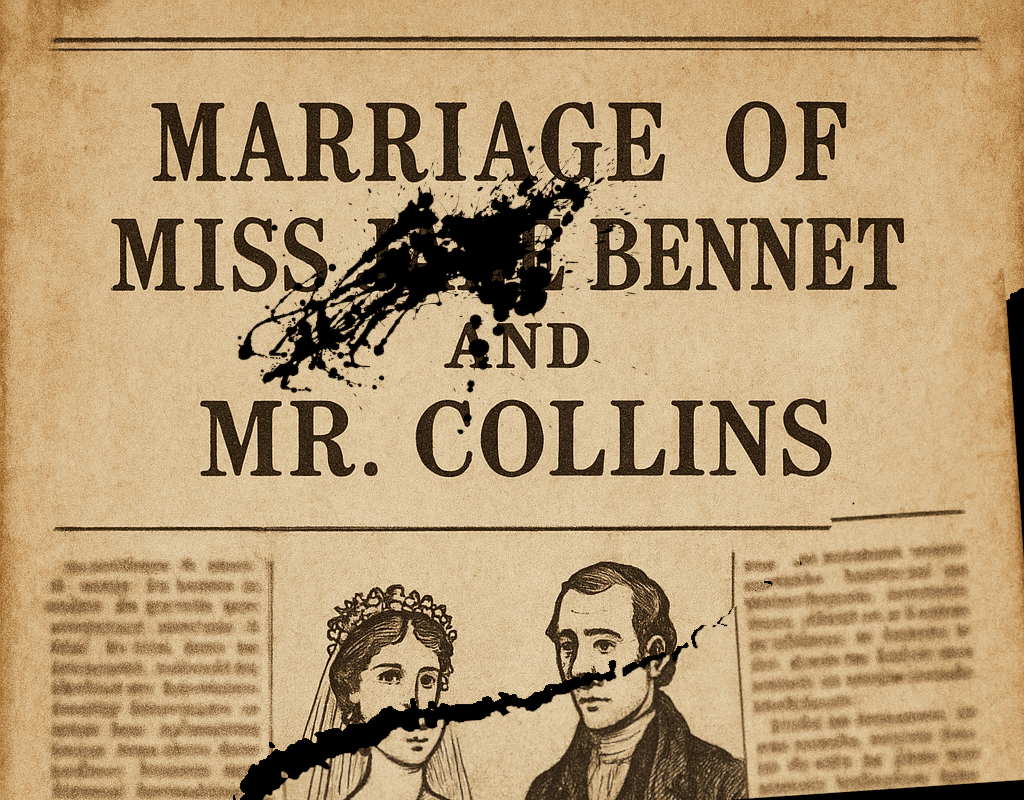
A Thought Experiment in Breaking Austen’s Masterpiece
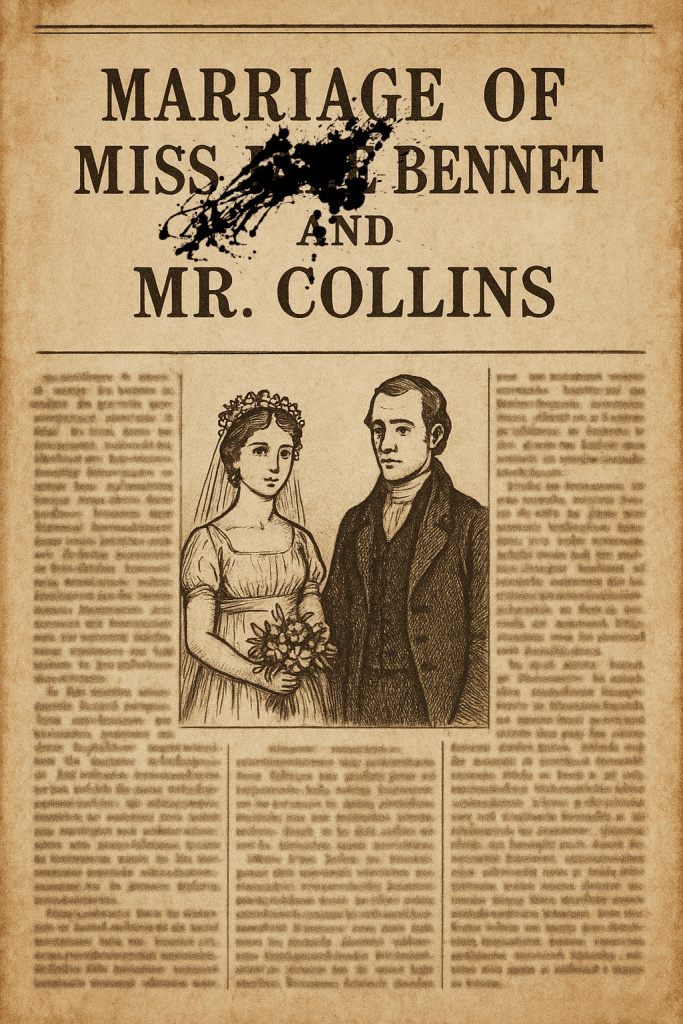
What if Pride and Prejudice were not a story about love at all, but about survival? What if, instead of witty misunderstandings and slow-burning romance, it became a story about duty, sacrifice, and the harsh realities of a world where security mattered more than happiness?
This time, the question I asked myself was this: what would it take for Miss Bennet to marry Mr. Collins? The idea feels absurd at first. Jane, gentle and kind, is the last person we imagine enduring the pompous attentions of Mr. Collins — or witty Elizabeth bound to the self-important Mr. Collins. And yet, in Austen’s world, such matches were not just possible — they were common. All we need is one small change to set the story on an entirely different path.
Let us imagine, then, that Mr. Bennet dies unexpectedly — suddenly, and early in the story. The Bennet family’s worst fear becomes reality: Longbourn, the family estate, passes immediately to Mr. Collins, the male heir. The comfortable, if precarious, existence of the Bennet women collapses overnight. None of the sisters is married or even betrothed.
In this version, Mr. Collins would not delay in stepping forward. Ever eager to do his duty (and to improve his own consequence), he would offer marriage to one of the Bennet daughters. But now the situation is far more desperate than in the original story. With their home no longer theirs and their financial future deeply uncertain, Mrs. Bennet’s nerves — and ambitions — would take command. Jane, as the eldest and most compliant, would be the obvious choice.
Meanwhile, events elsewhere have unfolded just as Austen wrote them. Mr. Bingley has left Hertfordshire for London, persuaded by Mr. Darcy that Jane’s feelings were not deeply engaged. With Darcy’s interference already having separated them, Jane’s hopes of marrying for love have all but vanished. And now, with the family’s position in peril, those hopes must give way to reality.
Jane, with her naturally selfless disposition, would see the choice clearly. A marriage to Mr. Collins would secure her mother and sisters a home, protect them from destitution, and preserve the family’s place in society. To refuse such a match — especially under pressure from her mother — would feel unthinkable. And so, Jane Bennet, whose heart once inclined toward a gentle, amiable man she truly loved, would instead marry a man she could merely tolerate.
But what if the earlier part of the story had already unfolded as Austen wrote it — and Mrs. Bennet had told Mr. Collins much earlier that Miss Jane Bennet was “soon to be engaged,” so his intentions had already turned to Elizabeth? I do not think Mr. Collins would have returned to Jane in this case, though the new widow Mrs. Bennet might have tried to make even that possible. But let us assume she did not interfere.
Here the story twists again. Elizabeth, who so famously refused Mr. Collins in the original tale, would now face a far more complicated decision. Would Elizabeth still refuse, even though the family now faced destitution? Or would she wait for Mr. Bingley to ride back to Longbourn on a white stallion and save the day? I do not think she would have married Mr. Collins, even in this case.
But what might Elizabeth have done if Mr. Collins had proposed to Jane? The family would be safe — but her sister’s future would be bound to a loveless marriage.
Which Miss Bennet would have become Mrs. Collins and the mistress of Longbourn in this scenario? Would Elizabeth choose to protect her family at the expense of her own heart? Or would Jane’s duty run deeper than Elizabeth’s pride?
Whatever the outcome, one thing is certain: the lightness and wit of Austen’s novel would darken into something more complex — a story not of courtship and happy endings, but of responsibility, sacrifice, and the heavy cost of doing what is right. And what would have happened to Lydia in this version? I’m afraid that without the influence (and money) of Mr. Darcy, she would have had a very different future.



 Artistic Adventures with Victoria
Leave a comment