
Time for the first post of this new project. I decided earlier that I would blog about the progress of the book, and here we go. This post is not about answers, but about the questions I’m facing at the very beginning.
This task is larger than anything I have written before. The storyline is far more complicated than the ones in my earlier children’s books.
The first question is simple, but not easy: where should I start? With the main storyline, the people, or the place?
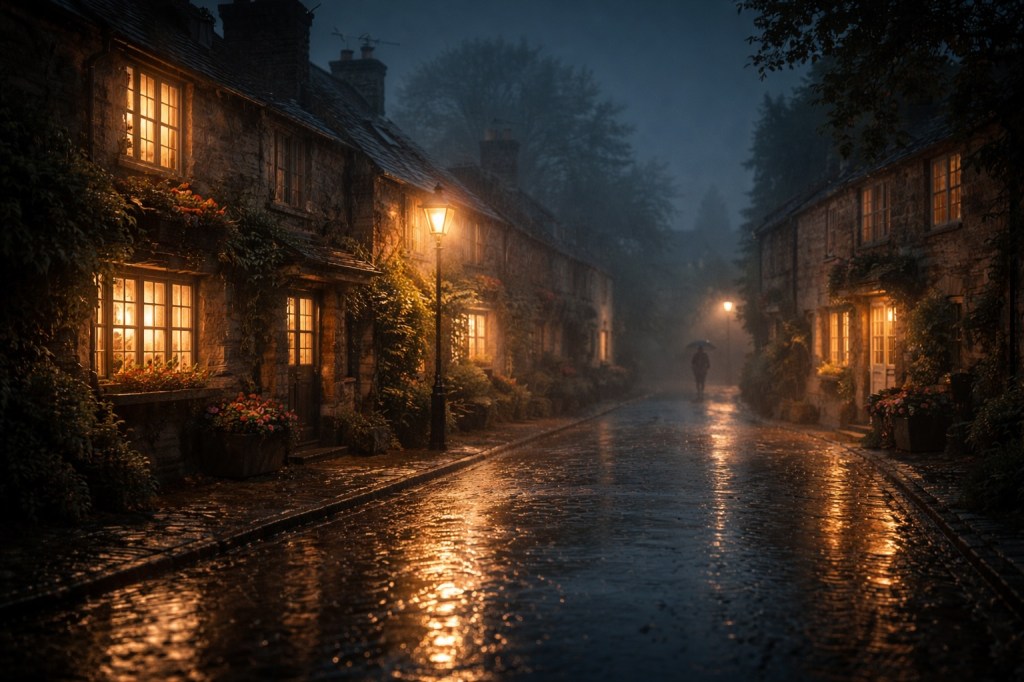
This time, my story does not have a fantasy element, but a mystery. Does that mean I can skip the world-building part? Probably not. The story still has a place where everything happens. So perhaps I need a map of the town. Then I could decide where everything takes place. But wait — what everything? What is important in a town, and what is important for my story? Which locations are crucial for the plot to progress?
Are distances important? For example, if the culprit needs twenty minutes by car to drive somewhere and back again, does that give them time to commit the crime and still be home for martinis?
That immediately raises new questions.
Who is my culprit?
What did he or she do?
This is the spine of the book, the plot itself. But where do I start building it?
Do I need to decide the crime first, or at least decide whether it was a crime?
I can’t help comparing this to my earlier books. Yes, they are children’s books, but they do have plots and twists as well. Length, however, makes a difference. With children’s stories, I could quite easily change small things or add details after the first draft. And I often did. With around thirty pages and only a couple of main characters, it is easy to keep everything in mind. Reading the whole story is quick, and small changes rarely cause problems.
This feels different. Or at least it feels different right now.
How do I keep track of everything? Do I even need to? Should I let the story develop on its own? What if it wanders somewhere I don’t want it to go, or reaches a dead end? How do I remember where a specific detail was mentioned? And how do I make sure that events form a proper chain of cause and effect?
I suspect I will need some sort of note-taking system. I may even need to plot out the full story before I start writing. Maybe. How do crime writers usually do this?
Or should I start with why everything happened? With the victim?
I once encountered the idea, expressed by a famous fictional detective, that crime is really about psychology, and that in the end, it is all about the victim.
Or should I start with my “star”, the one who solves the crime?
A crime story, and especially cozy crime, needs someone to investigate. I will need a detective. At least that much is clear. I don’t enjoy crime stories full of armed police, violent gangs, and special units. So my first real decision is this: my main character will be a sleuth.
One obvious option would be that she — yes, she — works at the local hospital, perhaps in pathology, and comes across a case where the death appears natural, but something feels off. That could be how the story begins. But I don’t want to play it out that way. Not quite. I still have many questions about what kind of amateur detective she should be.
But I have managed to decide one thing.
Meet Luna, the Ragdoll cat of my sleuth.


 Artistic Adventures with Victoria
Leave a comment